
Disposable tableware has become a daily necessity for homes, restaurants, events, and food delivery services. However, traditional plastic plates, bowls, and containers create long-term environmental problems because they do not decompose easily. As awareness grows around sustainability and waste reduction, biodegradable tableware has emerged as a responsible and practical alternative.
Biodegradable tableware offers the same convenience as conventional disposable products while significantly reducing environmental impact. Made from natural, renewable materials, these products are designed to break down naturally over time, leaving behind minimal waste. This makes them an ideal choice for individuals and businesses looking to combine convenience with environmental responsibility.
What Is Biodegradable Tableware?
Biodegradable tableware refers to disposable dining products that decompose naturally through biological processes. Instead of remaining in landfills for decades, these items gradually break down into organic matter under suitable conditions.
Common materials used in biodegradable tableware include plant fibers, agricultural by-products, and natural starches. These materials are carefully processed to create sturdy plates, bowls, clamshell containers, and food boxes that can handle hot, cold, wet, or oily foods without compromising performance.
Unlike plastic disposables, biodegradable tableware does not release harmful toxins during decomposition, making it safer for the environment, soil, and surrounding ecosystems.
Why Biodegradable Tableware Is Important
The environmental impact of single-use plastic is one of the biggest challenges faced today. Plastic waste clogs landfills, pollutes oceans, and harms wildlife. Switching to biodegradable tableware helps reduce this damage in several important ways.
First, biodegradable products significantly lower long-term waste accumulation. Because they decompose naturally, they do not contribute to permanent landfill buildup. Second, they are made from renewable resources rather than fossil fuels, helping conserve non-renewable materials. Third, biodegradable tableware supports healthier waste management practices by encouraging composting and responsible disposal.
For businesses, using eco-friendly tableware also demonstrates a commitment to sustainability. Customers increasingly prefer brands that take environmental responsibility seriously, and biodegradable tableware helps build trust and a positive brand image.
Types of Biodegradable Tableware
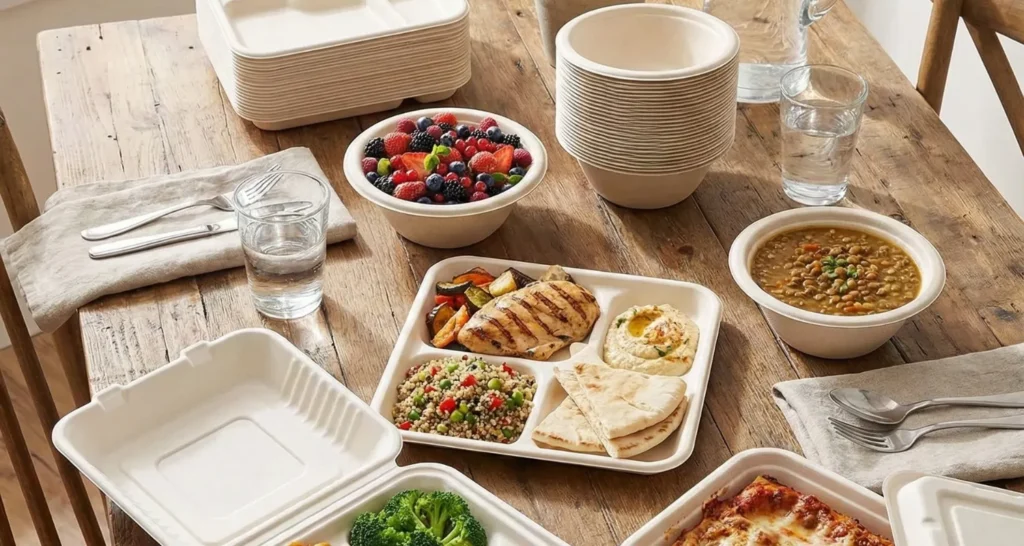
Biodegradable tableware is available in a wide variety of options to meet different food service needs.
Biodegradable plates are strong enough for full meals and resistant to bending or leaking. They work well for parties, catering, and everyday meals.
Biodegradable bowls are designed to hold liquids such as soups, curries, and salads. Their structure prevents seepage, even with hot foods.
Clamshell containers are commonly used for takeout and food delivery. These containers provide secure closure, retain heat, and protect food during transport.
Compostable food boxes are ideal for restaurants and cafes offering takeaway meals. They are microwave-safe, freezer-friendly, and suitable for a wide range of cuisines.
These products deliver the same functionality as plastic disposables while offering a far more sustainable end-of-life solution.
Benefits for Businesses and Bulk Buyers
Buying biodegradable tableware in bulk is a smart choice for restaurants, caterers, food trucks, and event planners. Bulk purchasing reduces per-unit costs, making eco-friendly products more affordable in the long run. It also ensures a steady supply, helping businesses avoid last-minute shortages during busy periods.
From a branding perspective, offering biodegradable tableware enhances a company’s reputation. Customers notice small details, and eco-friendly packaging can positively influence purchasing decisions. Businesses that use sustainable products often stand out in competitive markets.
Additionally, biodegradable tableware helps businesses stay aligned with evolving environmental regulations and sustainability standards, reducing future compliance concerns.
Environmental and Social Impact
Using biodegradable tableware contributes to broader environmental goals. The production process typically generates fewer carbon emissions than plastic manufacturing. When disposed of correctly, biodegradable items return to nature without harming soil or water systems.
Beyond environmental benefits, biodegradable tableware promotes responsible consumption habits. It encourages individuals and organizations to think more carefully about waste, disposal, and sustainability. This shift in mindset is essential for creating long-term environmental change.
How to Use and Dispose of Biodegradable Tableware Properly
To maximize the benefits of biodegradable tableware, proper disposal is important. Whenever possible, items should be composted in appropriate composting systems. In areas without composting facilities, biodegradable tableware still remains a better option than plastic because it breaks down faster and causes less harm.
Avoid mixing biodegradable products with plastic waste, as this can interfere with waste processing. Educating staff and customers about proper disposal helps ensure the full environmental benefit of using biodegradable tableware.
Final Thoughts
Biodegradable tableware represents a practical and meaningful step toward reducing environmental harm caused by single-use plastics. It combines convenience, performance, and sustainability without forcing consumers or businesses to compromise.
Whether used at home, for events, or in commercial food service, biodegradable tableware supports cleaner waste practices and a healthier planet. By choosing these products—especially through bulk purchasing—individuals and businesses can reduce their environmental footprint while meeting everyday dining needs efficiently and responsibly.


